How to Render Beef Tallow at Home (Easy Step-by-Step)
We may earn money or products from the companies and/or products mentioned in this post. Get this post in a printable format. Sign up for the Printables Vault and get access sent to your inbox immediately! Then add it to your Freeze Drying Binder!
Tallow is one of those old-fashioned pantry staples that’s making a big comeback, and for good reason. It’s rendered beef fat, and it’s amazing for frying, roasting potatoes, seasoning cast iron and baking. Best of all, the fat is usually cheap or even free from a butcher, and when you render it yourself you know exactly what’s in it.

I talked the guys at the butcher shop in Clinton into selling me 37 pounds of beef fat, even though they needed it for hunting season. And it was $1 a pound!!! Such a great deal. If you have a local butcher, ask. You might be surprised what they’ll set aside for you.
It sounds intimidating, but rendering tallow is mostly just low heat and patience. Here’s how I turned that mountain of fat into jars of creamy white tallow for my pantry.
What Is Tallow?
Tallow is beef (or mutton) fat that has been slowly melted down and strained, so all that’s left is pure fat. Pork fat rendered the same way is called lard. Once it’s rendered and strained well, tallow is firm and white at room temperature and has a mild, clean flavor.
Why I Render My Own
- It’s cheap. Ask your butcher or meat processor for beef fat trimmings. They often sell it for very little.
- It’s a great cooking fat. It handles high heat for frying and makes the crispiest potatoes.
- It stores well. Pure, well-strained tallow keeps a long time, which makes it a smart addition to your food storage.
- Nothing goes to waste. If you raise or buy beef in bulk, this uses up the fat you’d otherwise toss.
What You’ll Need
- Beef fat trimmings (suet, the firm fat from around the kidneys, renders the whitest tallow)
- A sharp knife and cutting board, or a meat grinder
- A slow cooker, roasting pan or heavy pot
- A ladle, a fine strainer and cheesecloth or a coffee filter
- Clean, dry glass jars with lids
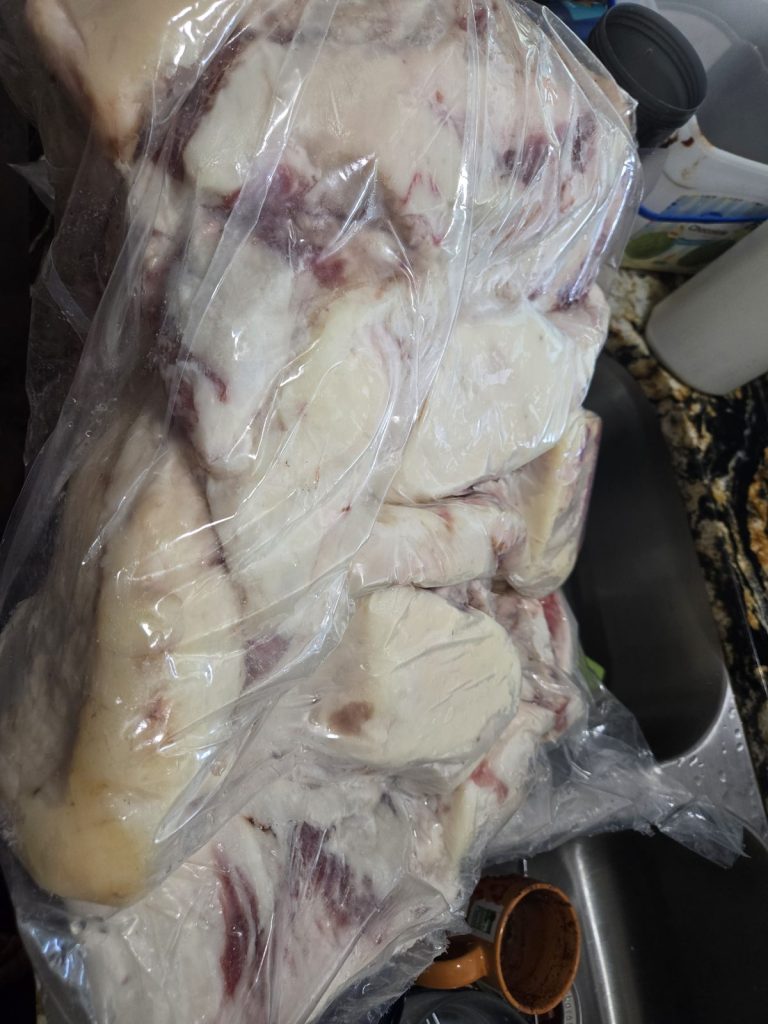
Step by Step: How I Render Tallow
1. Trim and cut the fat
Trim off any bits of meat and blood, since those can make your tallow taste beefy and spoil faster. Then cut the fat into small pieces or run it through a grinder. The smaller the pieces, the faster and more evenly it melts.
2. Melt it low and slow
Put the fat in a slow cooker, roasting pan or heavy pot over low heat. With 37 pounds to get through, I used my slow cooker and a big roasting pan at the same time. Stir now and then. Keep the heat low so the fat melts gently instead of frying and browning.
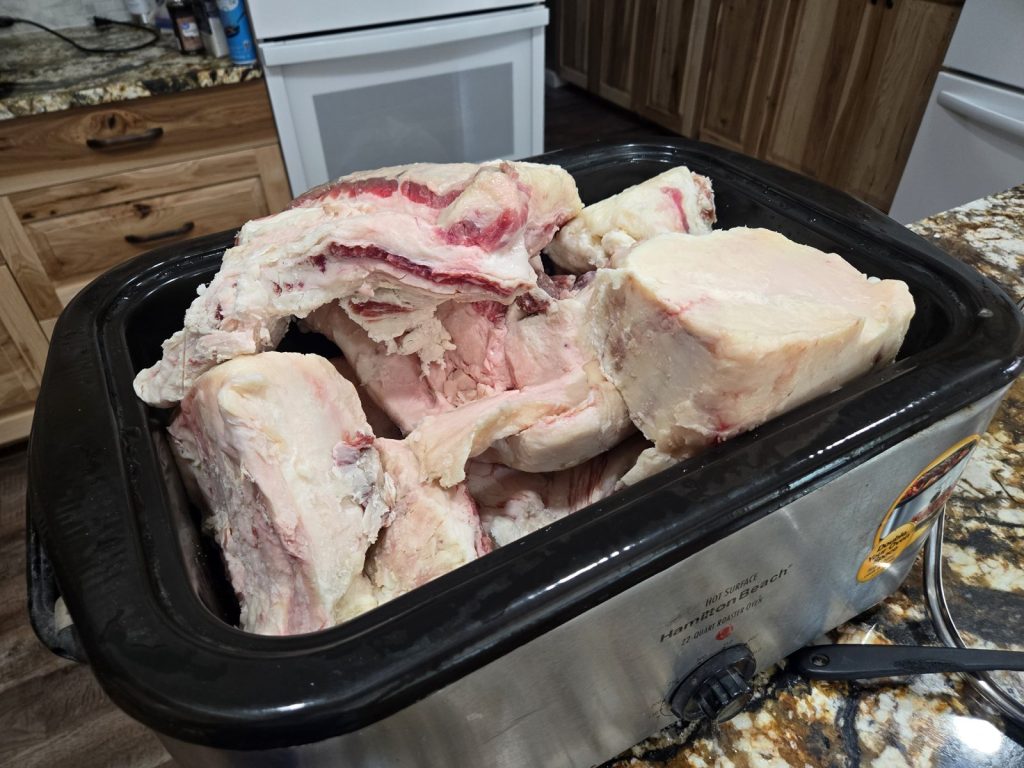

It takes several hours. You’ll know it’s done when the liquid is clear and golden and the leftover bits (cracklings) have shrunk and sunk or floated to the top.
3. Strain it well
Ladle the liquid fat through a fine strainer lined with cheesecloth or a coffee filter. Take your time with this step. The cleaner you strain it, the longer your tallow will keep.
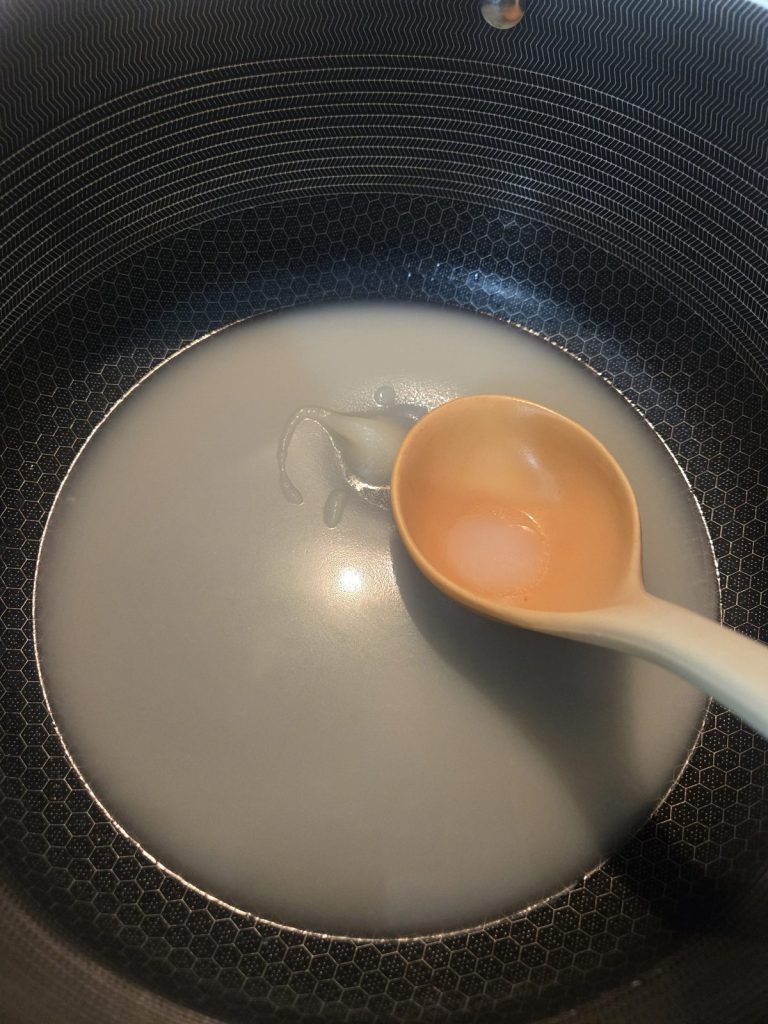
4. Pour into jars
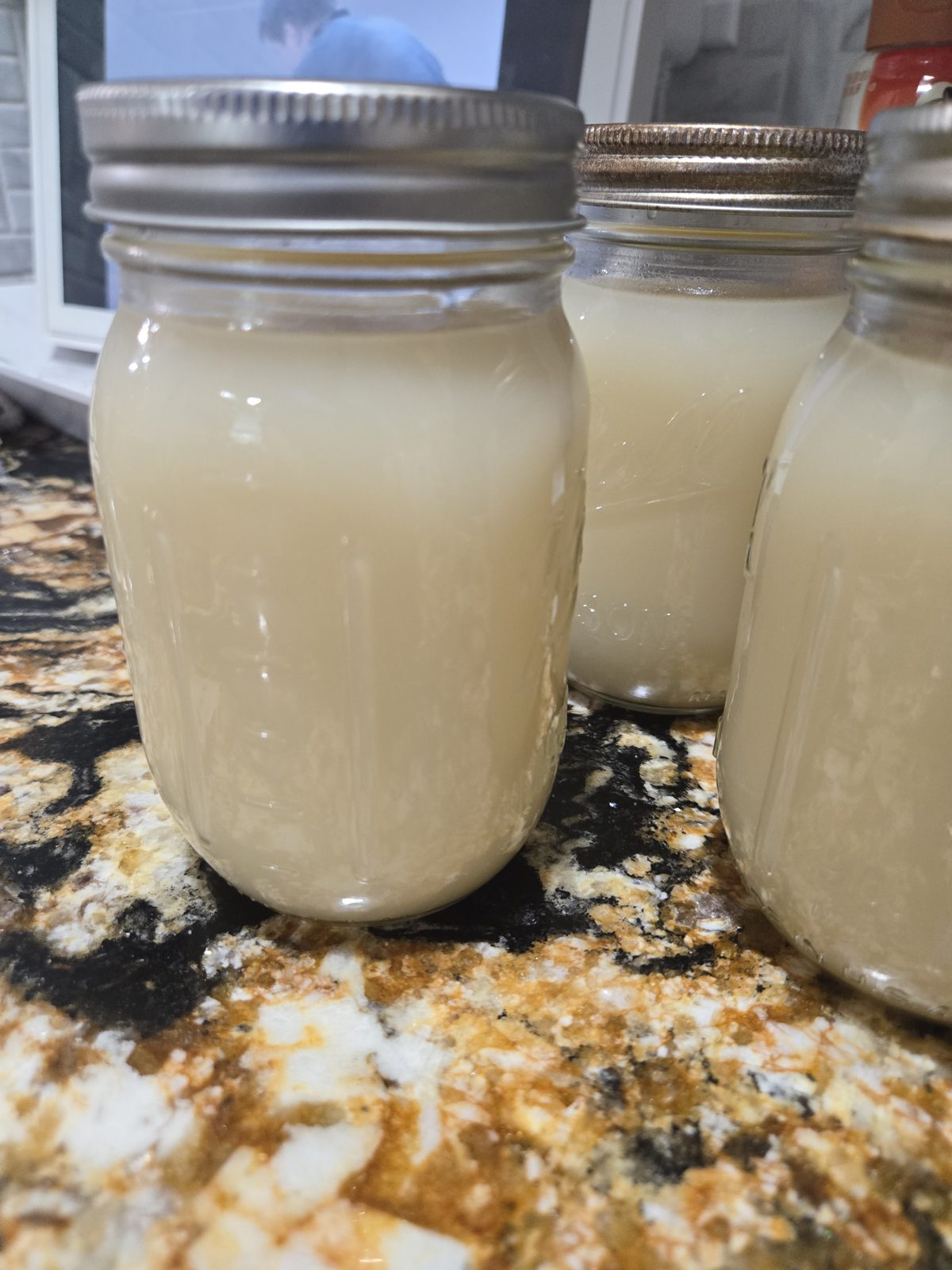
Pour the strained tallow into clean, completely dry jars. Any water left in the jar can make tallow spoil. It goes in a beautiful clear gold…

…and as it cools it turns creamy white and firm.
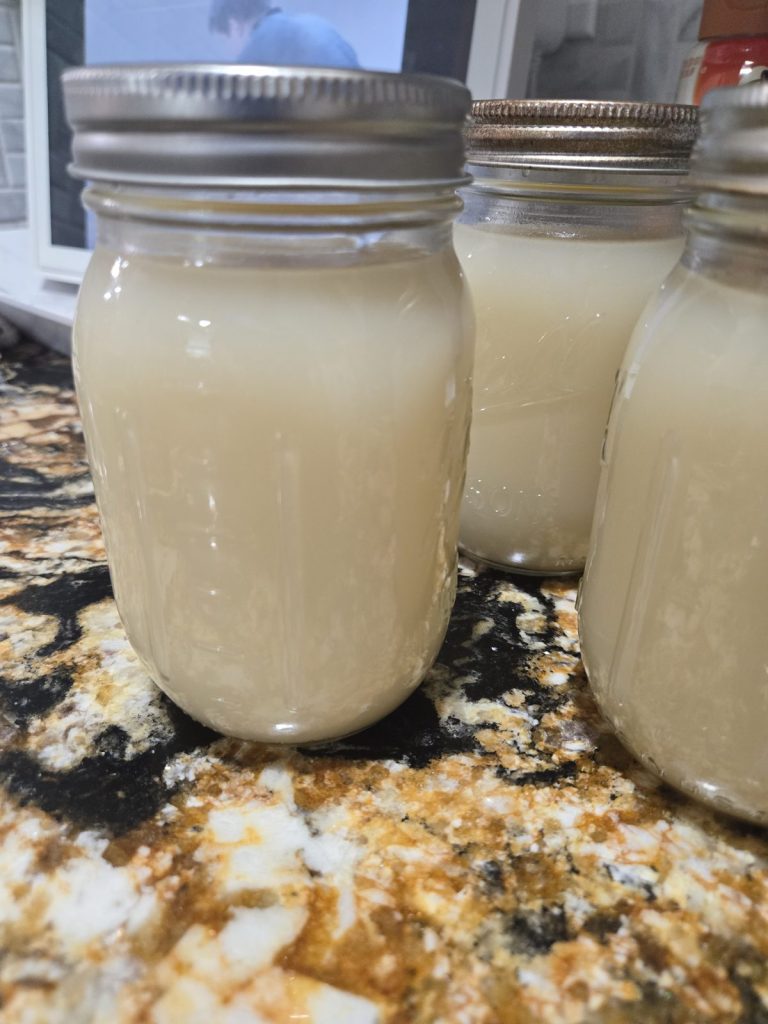
How I Store and Can My Tallow
Well-rendered, well-strained tallow keeps a long time. Most of the time I keep my jars in the fridge until I’m ready to use them. When I want jars for the pantry shelf, I can them:
- Water bath: I fill hot jars with hot, strained tallow, wipe the rims really well (grease is the enemy of a good seal), put on the lids and process in a hot water bath for 90 minutes.
- Oven canning: Only when I’m desperate to get it done and I know I’ll use those jars within the next month.
How I Use Tallow
- Frying and deep frying
- Roasting potatoes and vegetables
- Browning meat
- Seasoning cast iron
- Pie crust and biscuits
- Making homemade soap and balms
Rendered Beef Tallow
You’ll need
- Slow cooker, roasting pan or heavy pot
- Knife or meat grinder
- Ladle, fine strainer, cheesecloth or coffee filter
- Clean, dry glass jars with lids
Ingredients
- Beef fat trimmings or suet
Instructions
- Trim off meat and blood.
- Cut the fat small or grind it.
- Melt over low heat for several hours, stirring now and then.
- When the liquid is clear and the bits have shrunk, it’s done.
- Strain through cheesecloth or a coffee filter.
- Pour into clean, dry jars and let cool.
Storage
I keep mine in the fridge until I use it, or can it with a 90-minute hot water bath (my rebel method; see the note above).
MAMA’S TIP Strain it twice if you can. The cleaner your tallow, the whiter it looks and the longer it keeps.
Common Questions
Does tallow smell like beef?
Tallow made from suet has a very mild smell. Fat with meat left on it, or fat that got too hot, will taste beefier.
Why is my tallow yellow?
It’s yellow while it’s liquid and turns white as it cools. Grass-fed beef fat can stay a little more yellow, which is normal.
What do I do with the cracklings?
Salt them and snack on them, toss them on a salad, or give your dogs a treat.
Find more ways to stock your pantry in the Food Storage & Prep section, and grab the free Food Inventory printable in the Printables Vault.