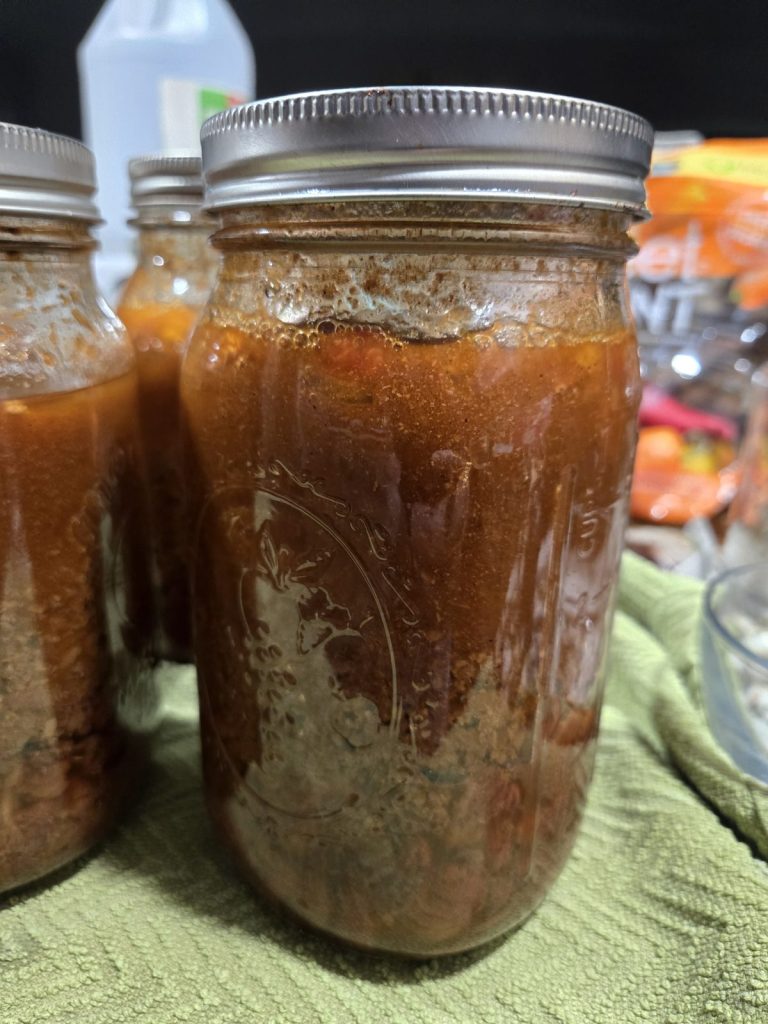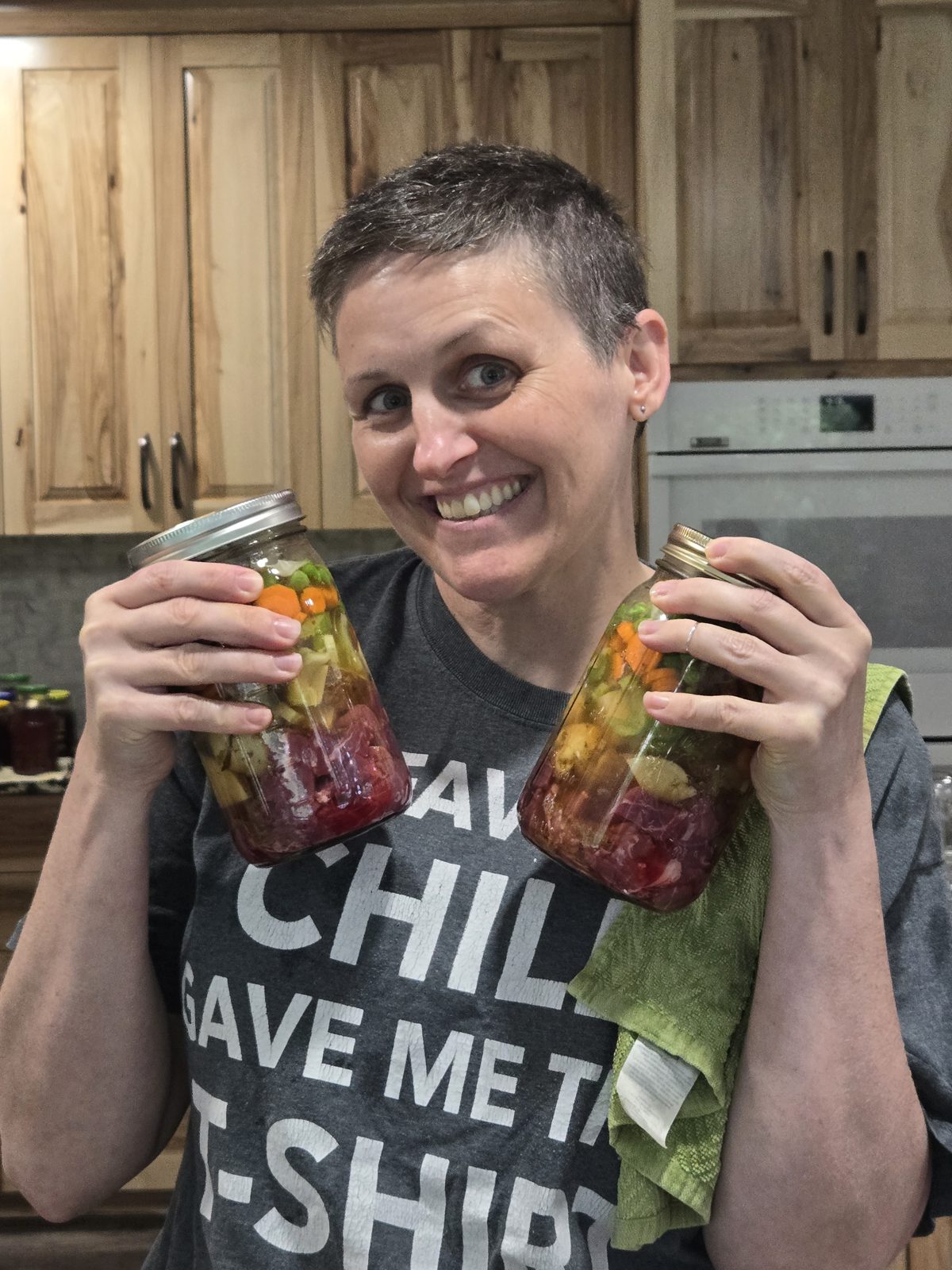
Canning Elk Meat: Raw-Pack Elk Stew in a Jar
We may earn money or products from the companies and/or products mentioned in this post. Get this post in a printable format. Sign up for the Printables Vault and get access sent to your inbox immediately! Then add it to your Freeze Drying Binder!
If I could only can one thing, it might be this. Raw elk, potatoes, carrots, onion, celery and peas layered right into quart jars, topped with broth, and pressure canned into a complete meal. No browning, no pre-cooking, no standing over the stove. Just layer, lid and let the canner do the work.
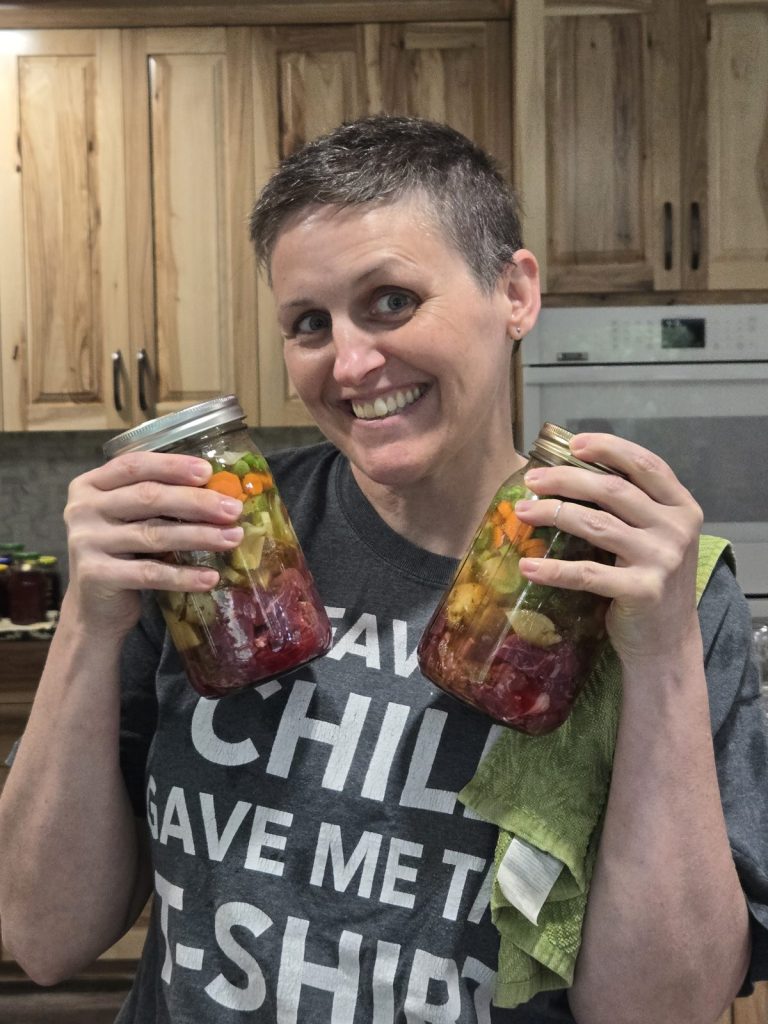
This is exactly the kind of jar I send with our hunters and pull out on crazy busy nights. Open it, heat it, and dinner is done. It works with elk, venison or beef stew meat.
What You’ll Need (per quart jar)
- Raw elk, venison or beef stew meat, cut into 1-inch cubes
- Potatoes, peeled and cubed
- Carrots, sliced
- Onion, chopped
- Celery, sliced
- Peas
- Beef bouillon or a spoonful of beef base
- Salt and pepper
- Water or broth
- Quart jars, new lids and bands, a canning funnel and a pressure canner
Step by Step: How I Layer Meal-in-a-Jar Stew
1. Meat goes in first
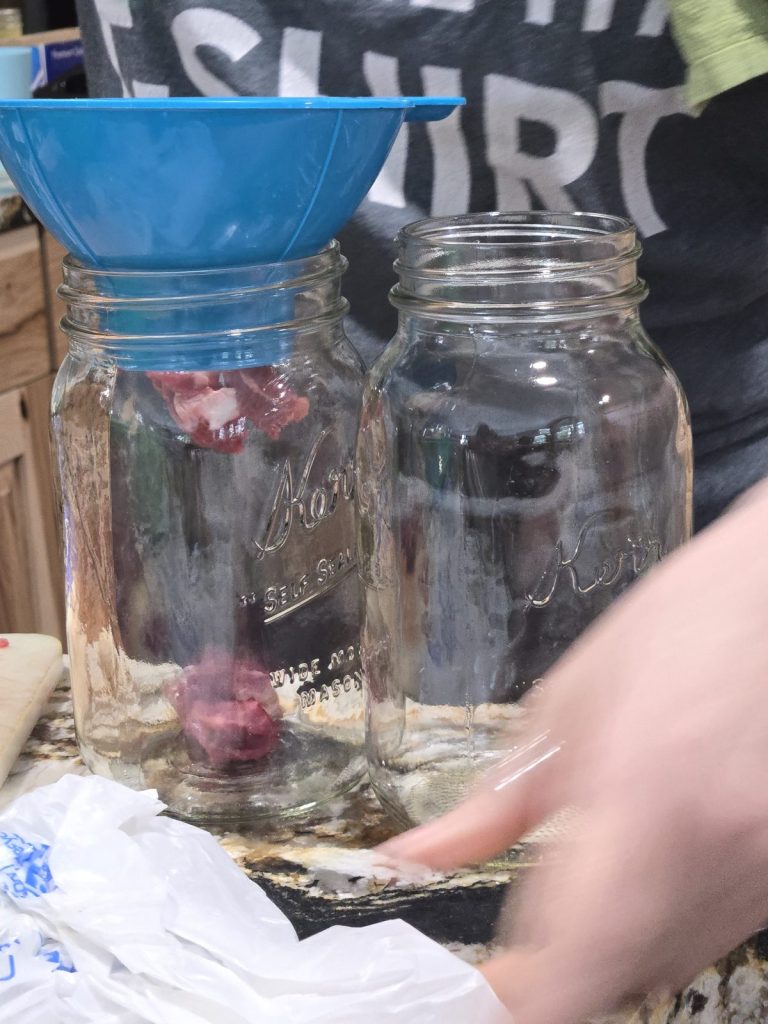
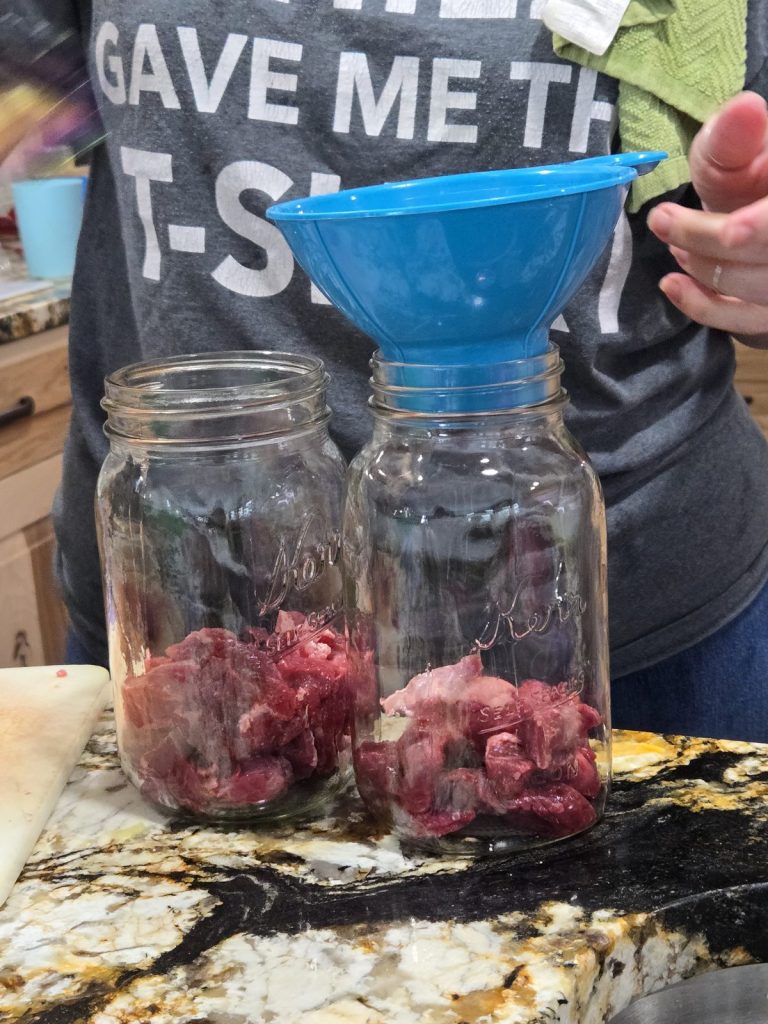
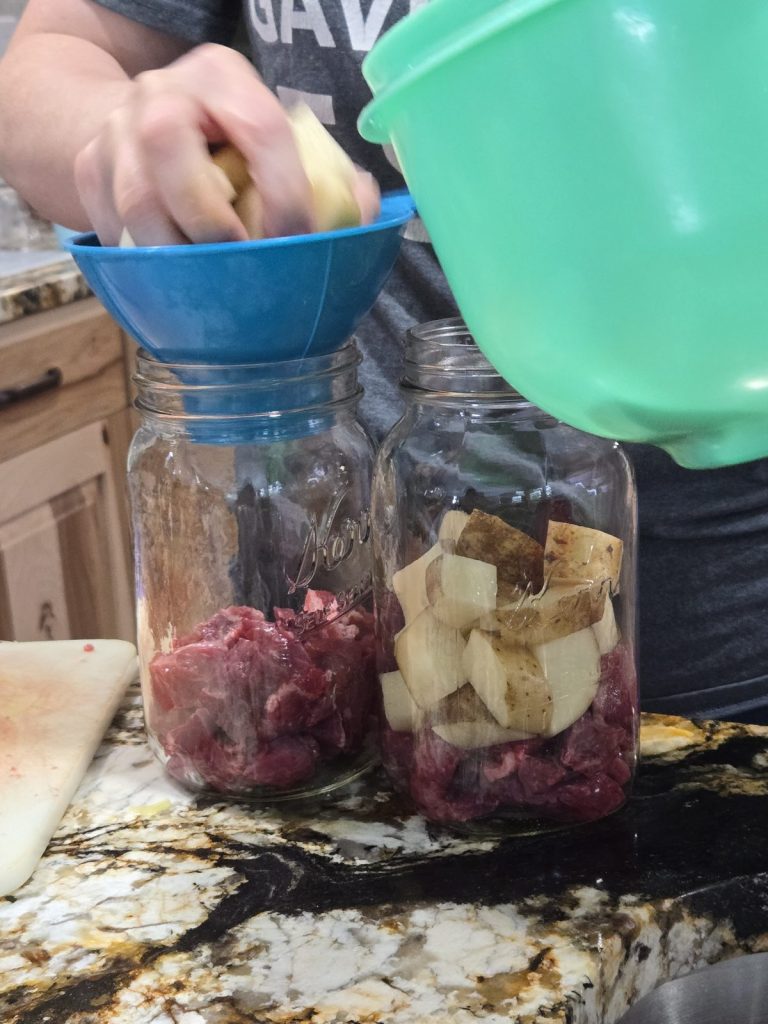
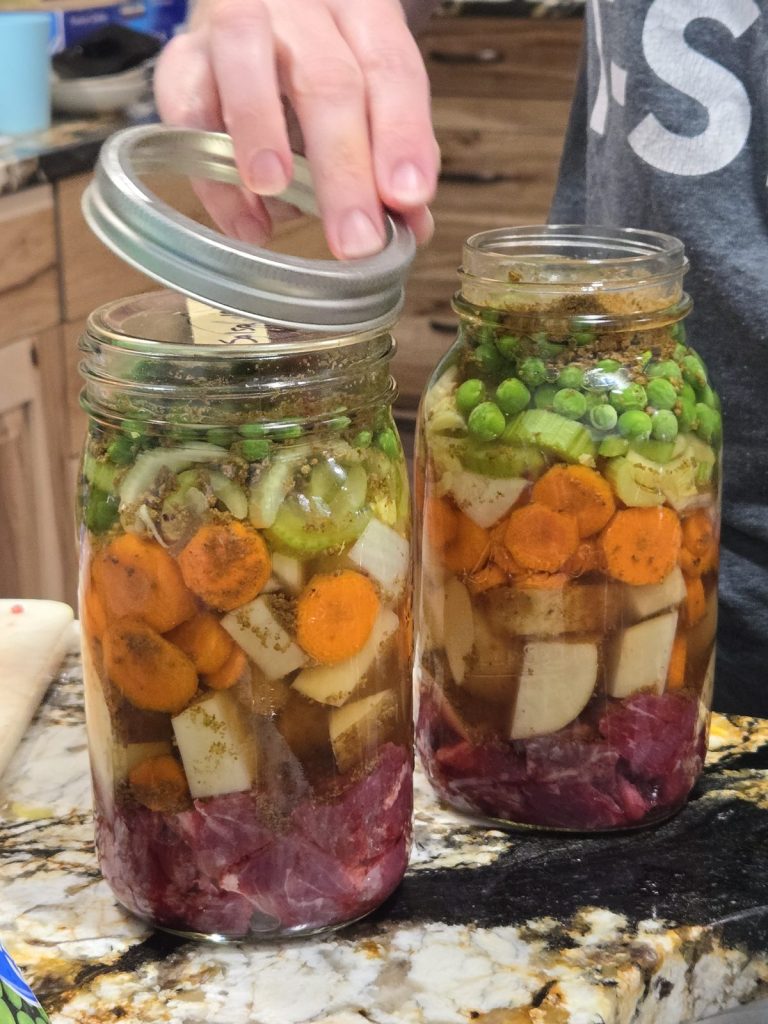
Using a wide canning funnel, add the raw meat to the bottom of each clean, hot jar.
2. Layer the vegetables
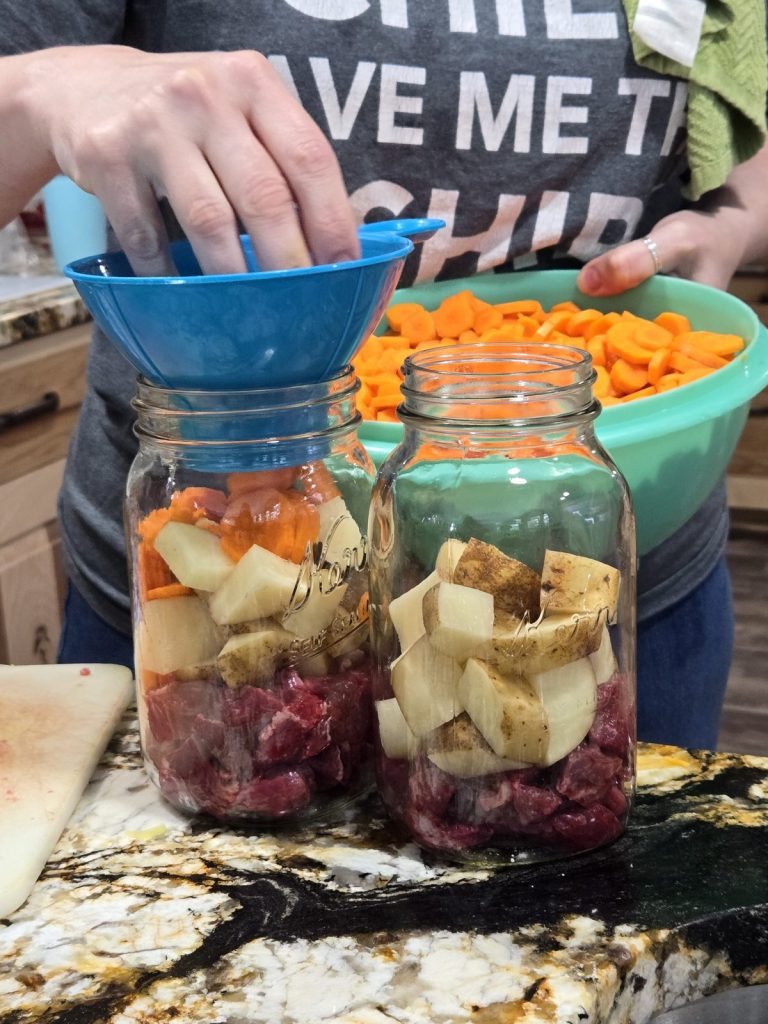
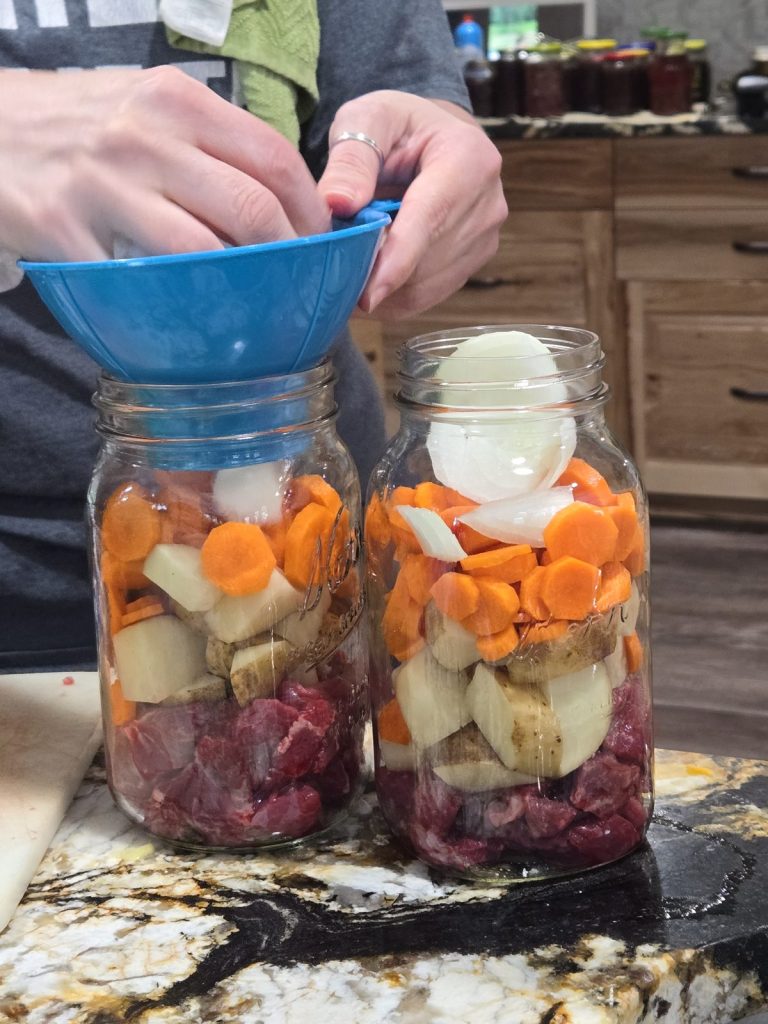
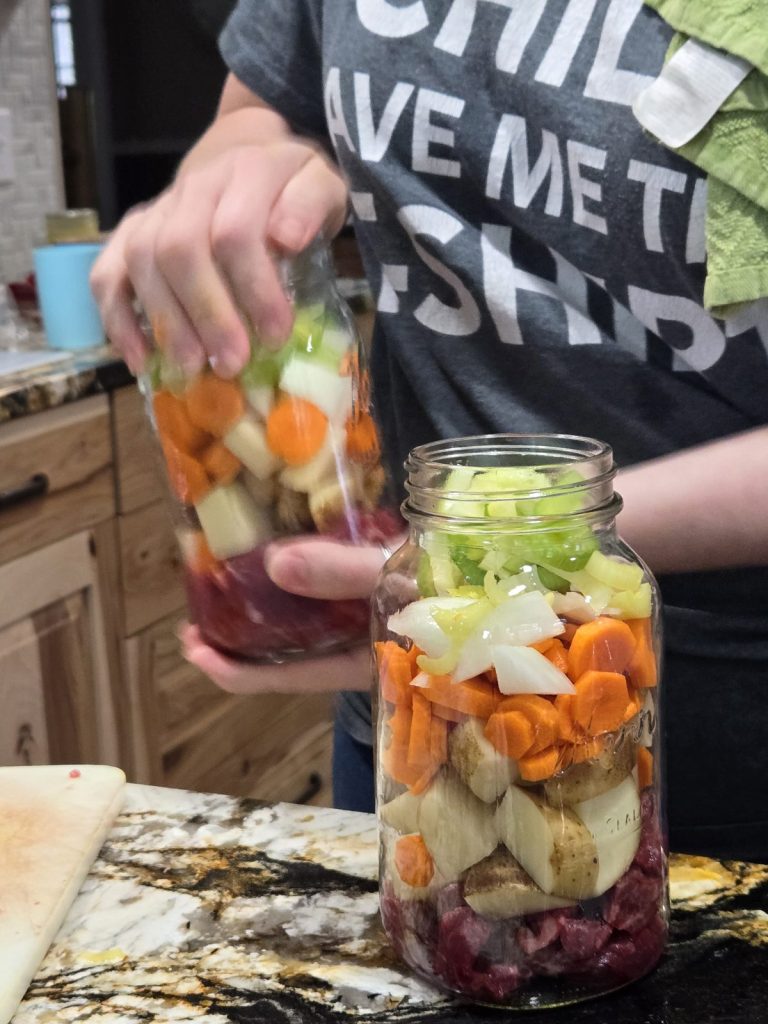
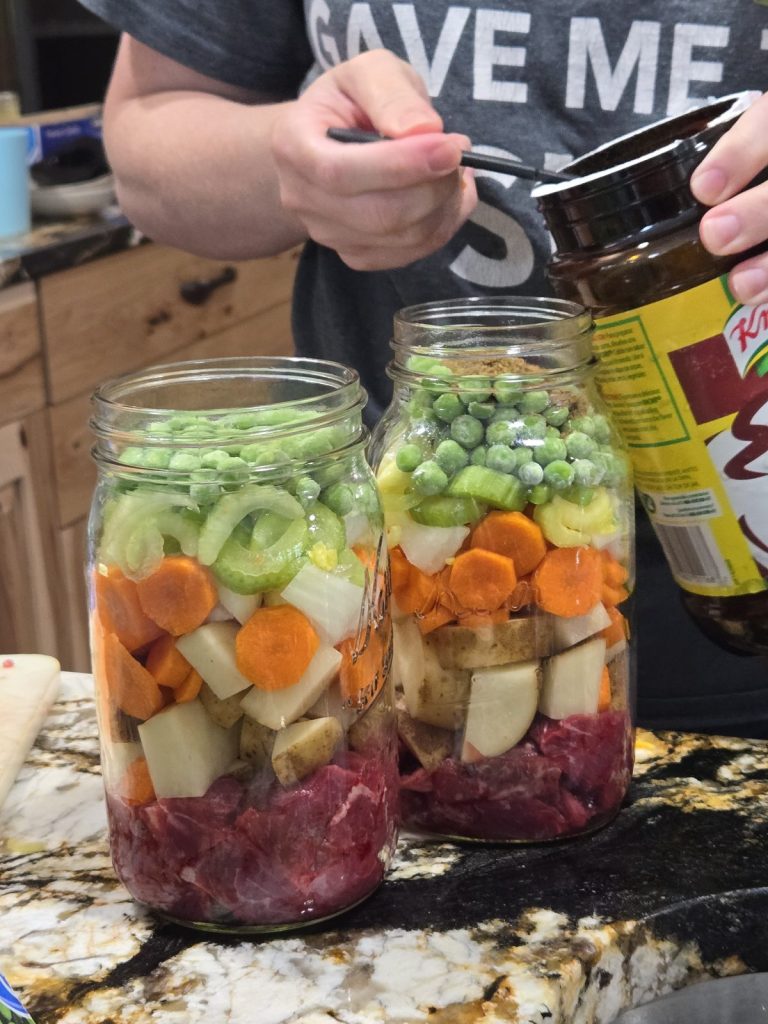
Next come the potatoes, then the carrots, onion and celery. Pack the layers snugly but don’t cram them.
3. Peas on top
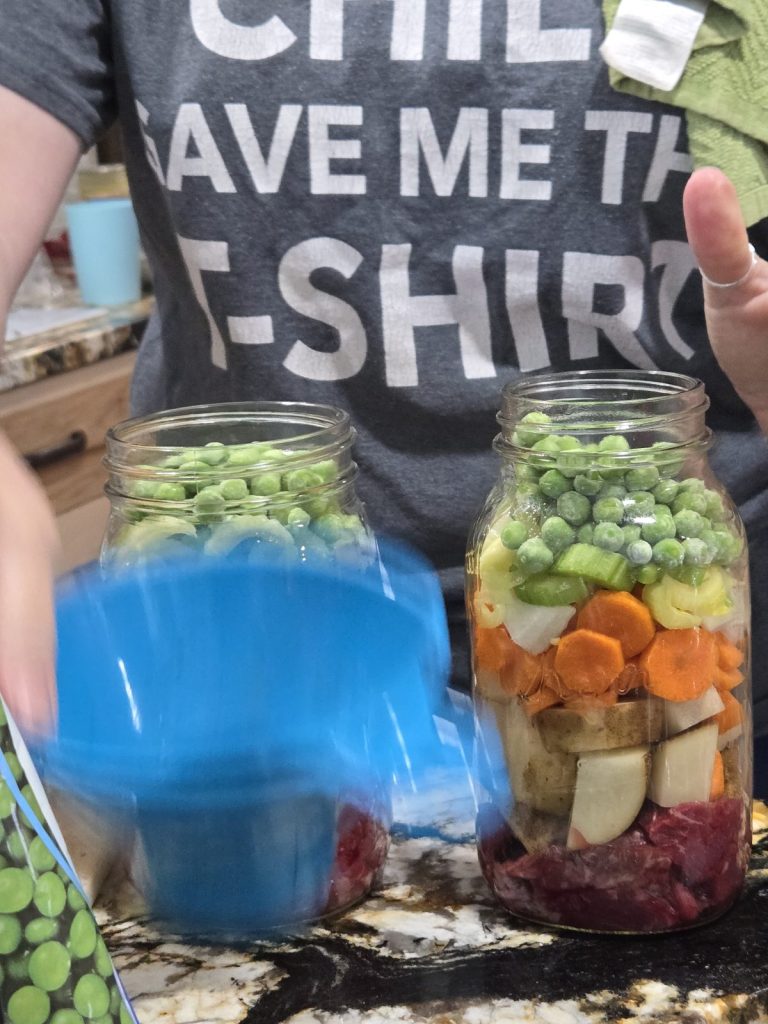
4. Season and add liquid
Add your bouillon or beef base and a little salt and pepper to each jar, then fill with water or broth, leaving 1 inch of headspace.
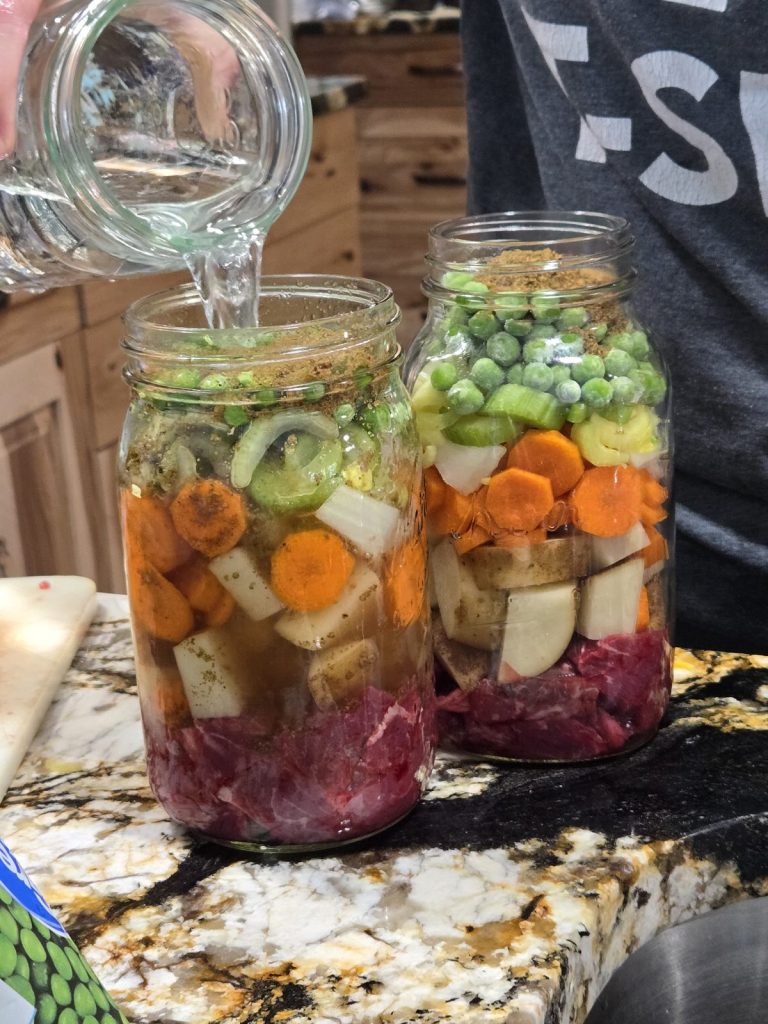
5. Wipe, lid and load
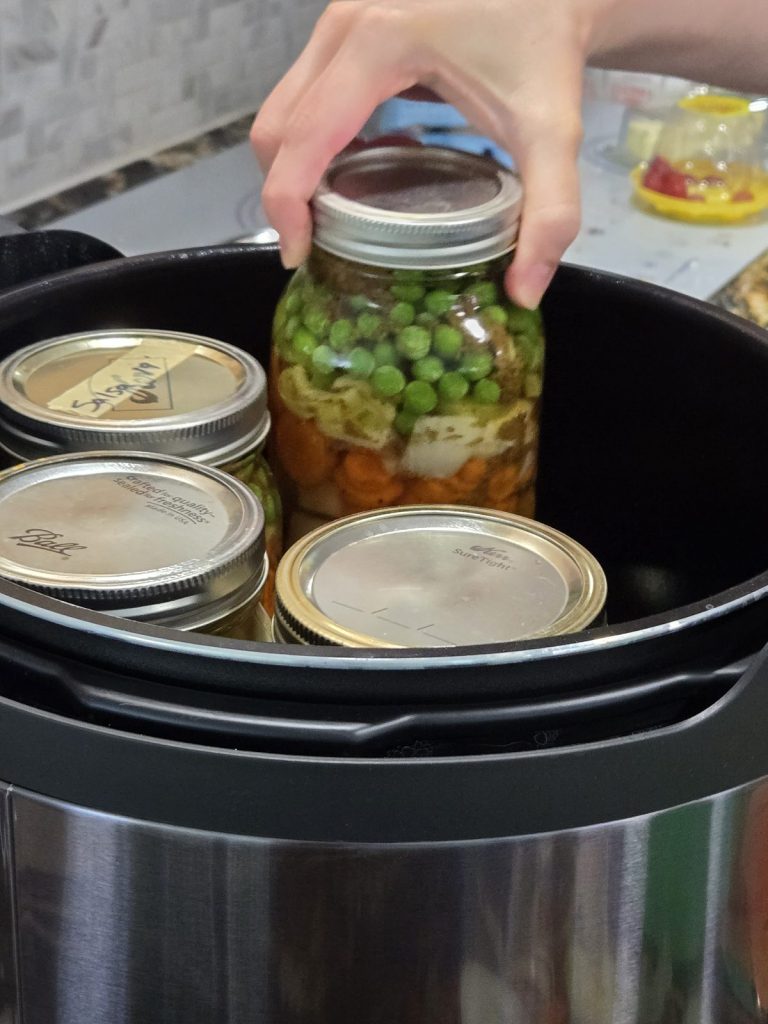
Wipe the rims really well (meat juices can keep a lid from sealing), add lids and bands, and load the jars into your pressure canner.
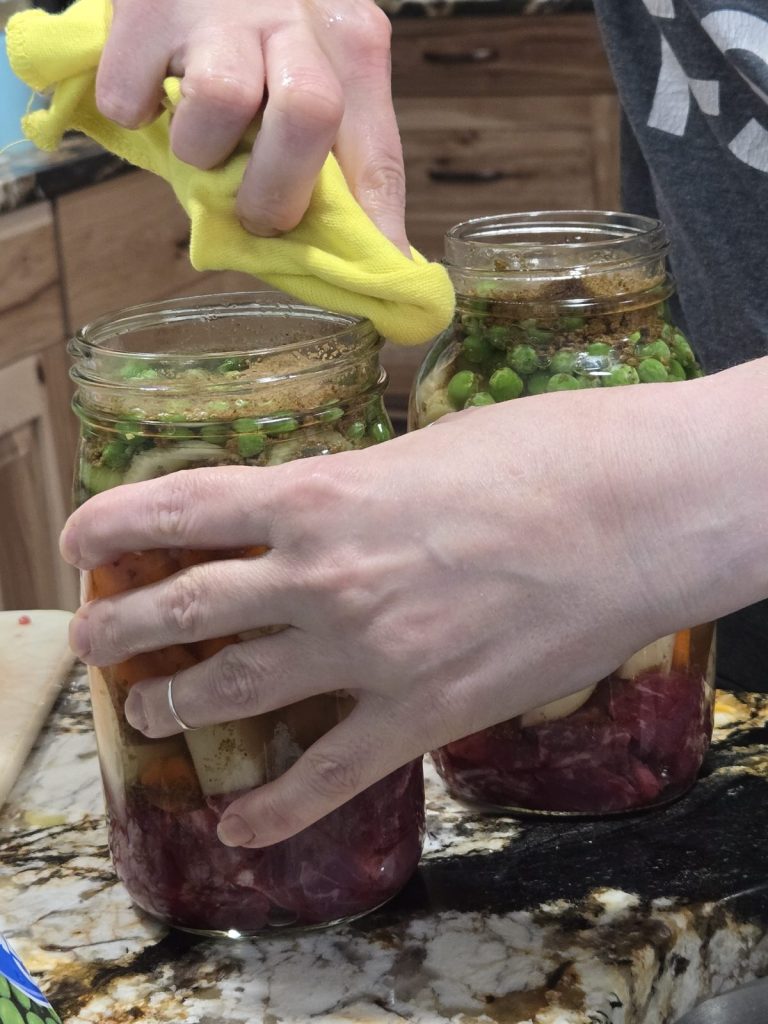
6. Pressure can
Raw-pack meat stew is processed 75 minutes for pints and 90 minutes for quarts. Follow your canner’s directions for water and venting, and use the pressure for your altitude:
| Altitude | Weighted gauge | Dial gauge |
|---|---|---|
| 0–1,000 ft | 10 lb | 11 lb |
| 1,001–2,000 ft | 15 lb | 11 lb |
| 2,001–4,000 ft | 15 lb | 12 lb |
| 4,001–6,000 ft | 15 lb | 13 lb |
| 6,001–8,000 ft | 15 lb | 14 lb |
These are the tested times for raw-pack meat stew (Ball / USDA guidelines). Meat cooks tender in the jar, so don’t worry about overdoing it.
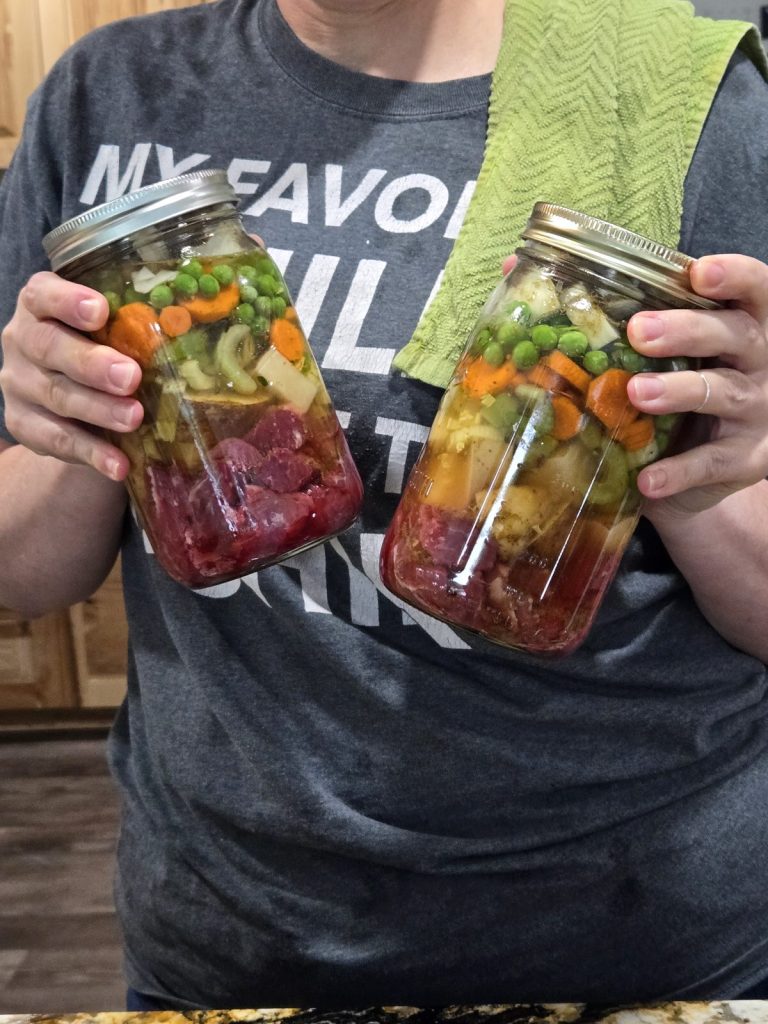
Let the canner come down to zero on its own, let the jars rest 12 to 24 hours, check the seals, and store.
Watch Me Can Elk
How to Serve It
Pour a jar into a pot and bring it to a boil. If you like a thicker stew, stir a little flour or cornstarch into cold water and add it while it simmers (never add thickeners before canning). Serve with bread or biscuits.
Grab the free Canning Log and Processing Times chart in the Vault.
Get them free
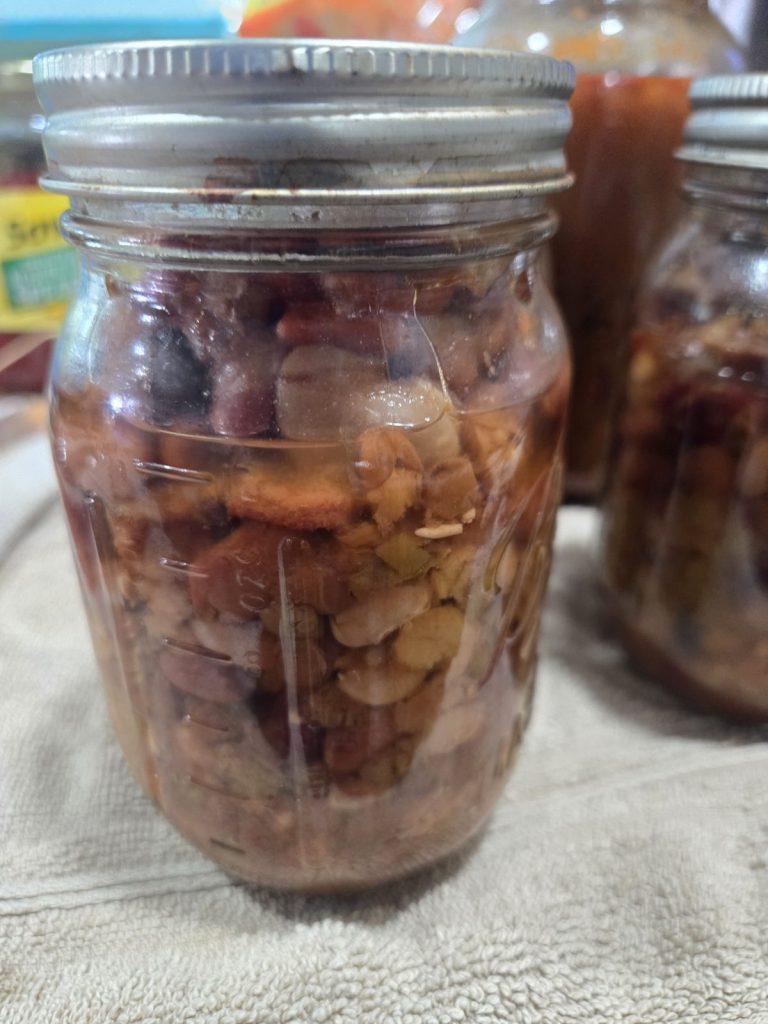
More meals in a jar: ham and 15-bean soup, clam chowder base and chili.